Sunday, November 14, 2010

Fertile Cresant Not So Fertile?


In Syria there's a place where most of agriculture started. Where farming really took roots. But lately, the old ways are dying out. There's been a huge drought in that area that's actually spreading towards Iraq. The ancient irrrigation systems are failing after so long, the animals that are grazing are dying and “I had 400 acres of wheat, and now it’s all desert,” said Ahmed Abdullah, 48, who is now homeless and living scantily with his wife and twelve (whoa) kids. Though, admittedly, its from human misuse as it is from drought. The Syrian and Iraqian government is in a lot of trouble because they have to import a lot of their food. And meanwhile Iraq is war ravaged and are facing a water crisis that is almost unheard of. They complain that the Euphrates is being dammed by Turkey and is causing bad tension. Two million to three million people are deep into poverty and its a very sad condition. The Syrians are very touchy about the subject but has acknoledged that they need help and has developed a drought plan. There has been a large increase in illegal water drills, that's how dire the situation is.

Opinion:
This is a very dire situation that cannot be taken lightly. The Syrians are stuck between a rock and a hard place and can't seem to dig themselves out. Hopefully maybe the US will get out of Iraq and realize that they're already in danger from mother nature. If I had enough money, I would probably donate money to their cause.
http://www.nytimes.com/2010/10/14/world/middleeast/14syria.html?partner=rss&emc=rss

Tuesday, November 9, 2010

A Fifth of the World's Invertbrates at Risk of Extinction


Because of the overwhelming demand for produce and other agricultural products, the animals that live is these areas will have to be looking for a new home. While soem might be able to find a new home most will die in the process. Each year the animal moves closer and closer to becoming exinct. They are being impacted by agricultural expansion, logging, over-exploitation and invasive alien species. Southeast Asia is being impacted the most because of and increase in palm oil farms, timber operations, and rice crops.

Just because some of the animals are being effected negativatly, some have shown signs of improvement, the California Condor, and the black footed ferret have all shown signs of growth in population.


To me this is a very horrible thing that is happening. We should not be taking these animals homes away from them just because we want to make more food. There should be certain areas where they are not allowed to use, this way the animals will have places to live instead of them just dying.


Qestions-

1. Who is being affected by the impacts of the expansion of agriculture?

2. Who is benefiting from this?

3. Who was hit the hardest?

4. What are some species that are benefiting or growing in size?

Thursday, October 14, 2010

Electrified nano filter promises to cut costs for clean drinking water

http://esciencenews.com/articles/2010/10/13/electrified.nano.filter.promises.cut.costs.clean.drinking.waterAlmost

one billion people do not have access to clean safe water. Scientists are now creating new tests that kills up 98 percent of disease filled bacteria. The scientists have studied that regular purifiers collect the bacteria with tiny pores in filters. By doing this alot of energy is used and these filters get clogged periodicly and need to be cleaned. In the end when the proces is finished it only traps the bacteria and not killing.


Yi Cui and collegues have studied that silver and electricity are both components of killing bacteria. There new plan for the filter would be large pores and allows water to flow through easily. The proces in which they use to filter the proces is as follows. They spread tiny silver nanowires onto cotton then they add a coating of carbon nanotubes. By doing this step it gives extra electricle conduct. Coli tanted water showed that this filter killed up to 98 percent of the disease filled bacteria inside of it. With this new filter it never cloged and could run throught the filter quickly without any pump. The coast of these new filters are very expensive. But in the long run it will coast less to filter things like air food and of course water. The new machines last longer and are more efficient and can lead us into a beter future.


I think we should invest in these filters. If they can take more disease's out of things we have a less chance of getting sick. In the long run it will actually cut down money we have to spend to replace clogged filters. I was amazed that with such huge pores it could filter so well.


1. What percent of bacteria does this filter kill?


2. What two components kill bacteria?


3. Who with the help of his colegues are working on this?


4. About how many people do not have access to clean water?

Chesapeake Bay Cleanup


Summary

For 27 years, 5 states have done almost nothing to help stop phosphorus and nitrogen pollution in the Chesapeake Bay. In fact, they contributed for 70% of all the pollution in the Chesapeake Bay. Algae blooms are happening too, depriving fish and crabs of oxygen, which kills them. Of the 5 states that are polluting the Chesapeake Bay, one of them is our state, Pennsylvania. The other 4 states are Virginia, West Virginia, Delaware, and New York. EPA has given them until November 29th to fix their cleanup plans or else they will raise sewer taxes, causing more property taxes on consumers and businesses. States are complaining that they do not have enough time to change cleanup plans and prevent pollution, but then again, they have been doing almost nothing for the past 27 years but adding to the pollution.


President Barack Obama issued an order for EPA to have more authority with the Chesapeake Bay clean up in May 2009. Since then, EPA has been laying down rules and new target dates to reduce pollution in the Chesapeake Bay. The target date used to be 2000, and the states failed to meet the goals, and yet again in 2010 they did not meet the goals. EPA has set 2025 for the new target goal to meet the mandated pollution goals.


Reflection
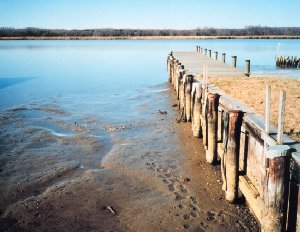
I can't believe that this is happening. And it has been happening for the past 27 years. Hopefully, the states will change their plans for waste products and lower pollution in the Chesapeake Bay, or else they will get taxed for what they do, and we will be affected by those taxes too. There is a lot of pollution in the Chesapeake Bay already, and if we continue to contribute waste, think of what will happen to that area. It would probably have a different color and a lot of the trash in the above picture.


Questions

  • When should pollution be reduced to a set goal?
  • Which states were dumping waste into the Chesapeake Bay, contributing to about 70% of all the pollution?
  • How come algae blooms are happening?
  • What is it called when algae deprive fish and other sea life of oxygen, killing them?

Tuesday, October 12, 2010

Canadian Rain Forest Edges Oil Pipeline Path


A proposed plan to build a oil pipeline from Alberta, Canada to the western coast of that nation could put pristine Canadian western coastline in environmental danger. An oil company wants to use the pipeline to carry 525,00 barrels of oil to the coast line daily for overseas oil export. Environmentally, this pipeline poses a risk because it will pass through watersheds that are important to the Canadian commercial fishing industry and go right by both Coastal First Nations lands and the Great Bear Rainforest. The Great Bear Rainforest is a protected coastal region that contains red cedars, spruce, and the rarely seen all-white "spirit bear." Although the proposed pipeline does not go through the Great Bear Rainforest, it places this protected habitat in danger because to get to the pipeline terminal oil tankers would have to pass through “treacherous waters, with tremendous currents”, according to an environmental organization which assessed the environmental risks of this plan. The pipeline would threaten not just the lives of the plants and animals in the rainforest, but the lives of the Coastal First Nation people who live in or nearby the rainforest and depend on the food it supplies for their livelyhood. The survial of the Coastal First Nation people would be put in jeopardy if there was an oil spill. "One major oil spill on the coast of British Columbia would wipe us out," Coastal First Nations director Gerald Amos
Opinion / Reflection:
I don’t think that Canada should endanger the lives of plants, animals and people to ship oil to other countries. The people who profit from the sale of the oil are not the people who will suffer if there is an spill. The recent oil spill in the Gulf of Mexico should be a warning to Canadians about the devastation that an oil spill can cause. Why would they want to risk harming a protected rainforest?
Questions
1.How many barrels of oil dose the pipeline move a day?
2. Name one plant found in the Great Bear Rainforest?
3.what contry is this taking place?
http://news.nationalgeographic.com/news/2010/10/photogalleries/101007-energy-enbridge-oil-pipeline-canadian-rain-forest-pictures/?now=2010-10-07-00:01

Coral Reefs In Danger?


Because of the extreme heat of late, a lot of things have been in danger. But one that might see very horrible measures is coral reefs, home of millions of sea life. You can tell when reefs are in danger when they shed or bleach to white into survival mode. But this has only been the second worldwide bleaching of coral reefs, and the last time was in 1996, the hottest year in recordThey are early sign for climate changes, and so far they haven't been wrong yet. All of coral is made of up of tiny animals called polyps and have a special relationship with algae. They are important to our ecosystems and could be catastrophic if they end up dying. Whole populations of people rely on reef fish for food. Though most coral reefs can make a comeback if the temperature goes down, but if the climate rise continues, then there may be no going back.

I think this is so horrible! Look how global warming is effecting us. The only way we could help the coral is to slow global warming. I wonder if there's anything the scientists are doing. I think that corals are really pretty and helping the ecosystems a lot. Hopefully this will all be worked out some time.

1.) What happens to the coral in extreme heat?
2.)When was the last time coral started dying?
3.)What animals make up coral?
4.)Do you think coral has a chance?

Wednesday, October 6, 2010

Wlidlife: A Bevy of New Species Discovered in Papua New Guinea


http://ecocentric.blogs.time.com/2010/10/06/wildlife-a-bevy-of-new-species-discovered-in-papua-new-guinea/?xid=rsstopstories&utm_source=feedburner&utm_medium=feed&utm_campaign=Feed%3A+time%2Ftopstories+%28TIME%3A+Top+Stories%29


Summary:


There has been a discovery of 200 new species of plants and animals in the forests of Papua New Guinea. They have found different versions of animals and plants, but they have also found new never before seen plants and animals. For the Conservalion International (CI) this just goes to show you that everything still hasn't been discovered on Earth. Yellow-spotted frog, Ceratorbrachid frog, Emerald-green katydid, and Sharp-legged katydid were some of the new discoveries that they found. The sharp-legged katydid has sharp legs on the top of its head and jabs all of its predators, as a deffense mechanism. Loggers and oil palm producers pose a threat on the wildlife here. If they do pose a threat the CI would like to save at least 25% of the plants and animals.

Opinion/Reflection:

I think that this is a really cool thing, I thought that they knew everything that was on this earth, but I guess you will always be able to find new species. That is a very cool way that the katydid can fight off its predators that way it won't get eaten. I also hope that the loggers and oil palm producers do not effect the forest, I'm sure that some of these areas have never seen humans before and it would be really bad if we messed up their habitat.

Questions:

1. Where did they find these new species?

2. Name two of the four species that were listed.

3. How does the sharp-legged katydid fight off its preadators?

4. What percent of the forest do they want to save?